 Experience Pattaya City
Experience Pattaya City
Experience Pattaya City
Beneath the coastline's modern ambition lies a civilisation that has been building temples, offering incense, and reading the stars for over a thousand years. This is not heritage as museum piece. It is heritage as daily life.
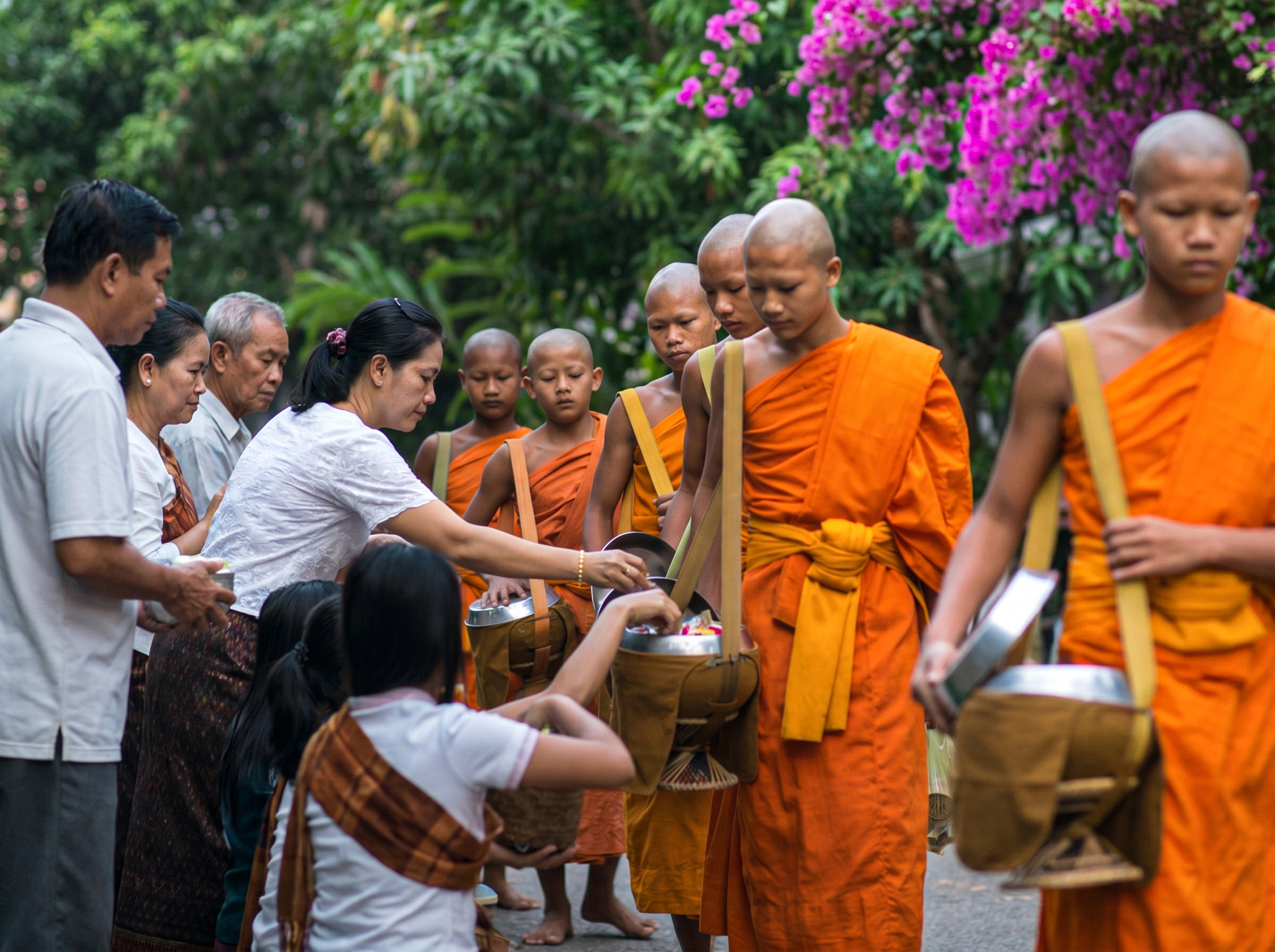
Before Pattaya became a coastline that the world flew towards, it was a fishing settlement shaped entirely by the rhythms of Theravada Buddhism. The monks' morning alms walk — the tak bat — began before the boats went out. The temple calendar governed the seasons. The sea was not just a livelihood; it was a place the spirits watched over.
That foundational relationship between the people of Chonburi Province and their spiritual life has never been interrupted — not by tourism, not by development, not by the global forces that reshaped the city's surface. Beneath the resorts and the expressways, the same incense burns at the same shrines that stood here centuries before the first foreign visitor arrived.
"In Thailand, a temple is not a monument to the past. It is infrastructure for the present — as essential as a hospital, a school, or a market."
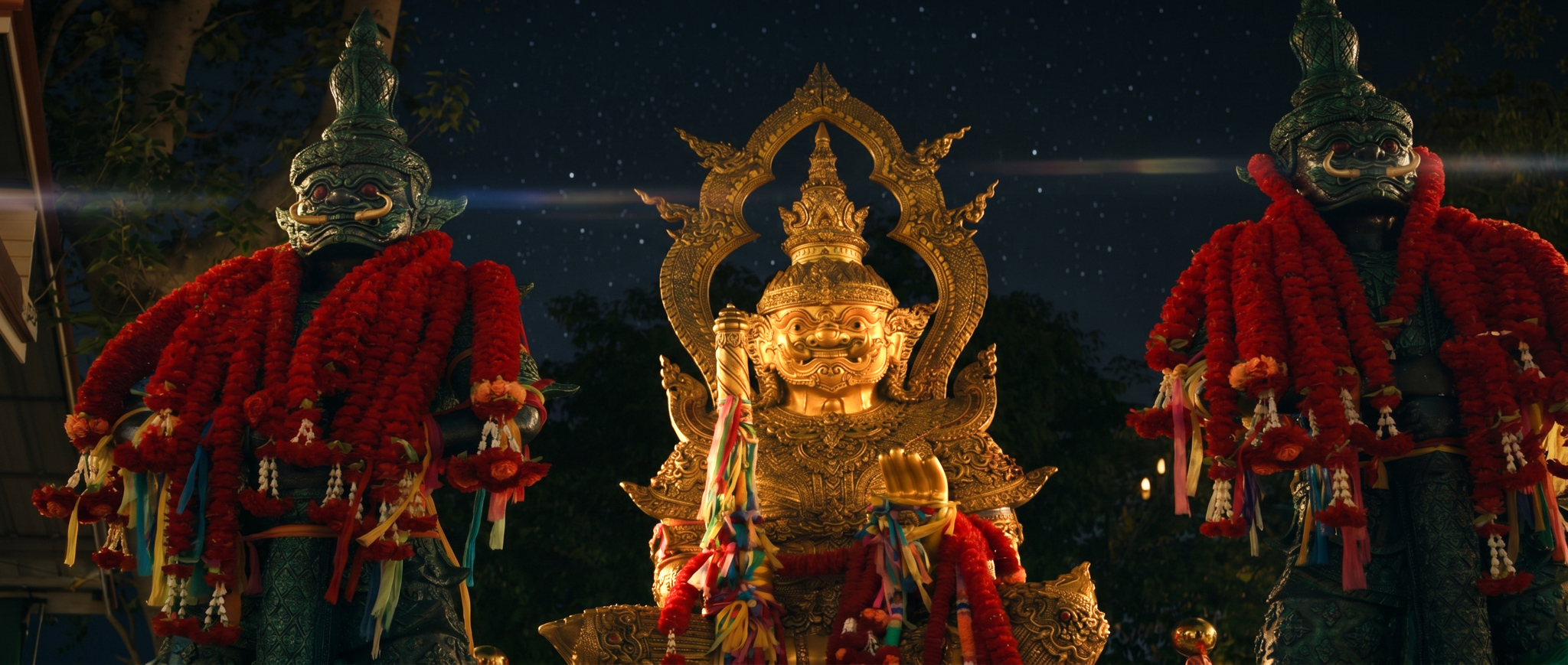
More than 94% of Thailand's population identifies as Theravada Buddhist — the oldest surviving school of Buddhism, introduced to mainland Southeast Asia from Sri Lanka around the 3rd century BCE. In Pattaya and Chonburi Province, this is not a statistical fact. It is the architecture of daily existence: how time is measured, how decisions are made, how the dead are honoured, and how the living find courage to face the sea.
The Five Precepts form the ethical backbone of Buddhist life — abstaining from killing, stealing, sexual misconduct, lying, and intoxicants. These are not commandments but voluntary commitments, renewed daily through intention.
The act of giving — to monks, temples, and those in need — is considered the first step on the path to liberation. Every morning, the tak bat (alms offering) transfers merit from the giver to the community, binding neighbourhoods together in an unbroken daily ritual.
Every temple in Pattaya offers meditation sessions, and most Thai men ordain as monks for at least a brief period in their lives. The monastery is a university, a hospital, and a retreat — often all three simultaneously.
The belief that every action — in this life and previous ones — shapes present circumstance is not fatalism. It is a framework of accountability that permeates business decisions, relationships, and the treatment of strangers. Hospitality has metaphysical weight in Thai culture.
The monastic community is the third jewel of Buddhism — after the Buddha and the Dhamma. The temple compound (wat) is the physical heart of every Thai village and urban district, providing education, counselling, rites of passage, and communal gathering space.
Each wat in the province is a living archive — of architectural ambition, of royal patronage, of a community's self-understanding across centuries. These are not tourist stops. They are the city's oldest institutions, still in uninterrupted operation.
Built on the order of His Majesty King Bhumibol Adulyadej and named for the Supreme Patriarch Somdet Phra Yanasangvorn, this temple complex is one of the most significant royal religious sites in all of Thailand. Spread across 700 rai (over 1,100 acres) of forested Chonburi hillside, the grounds contain distinct architectural zones representing Thai, Chinese, and Indian Buddhist traditions — an intentional act of spiritual diplomacy in stone, gold, and jungle.
The Chinese Pavilion — modelled precisely on Nanjing's famous architecture — and the Thai Pavilion, with its multi-tiered golden spires visible for kilometres, were gifts from different nations to the Thai throne. The grounds also contain a meditation centre that hosts practitioners from across Asia and draws serious dharma students from as far as Europe.
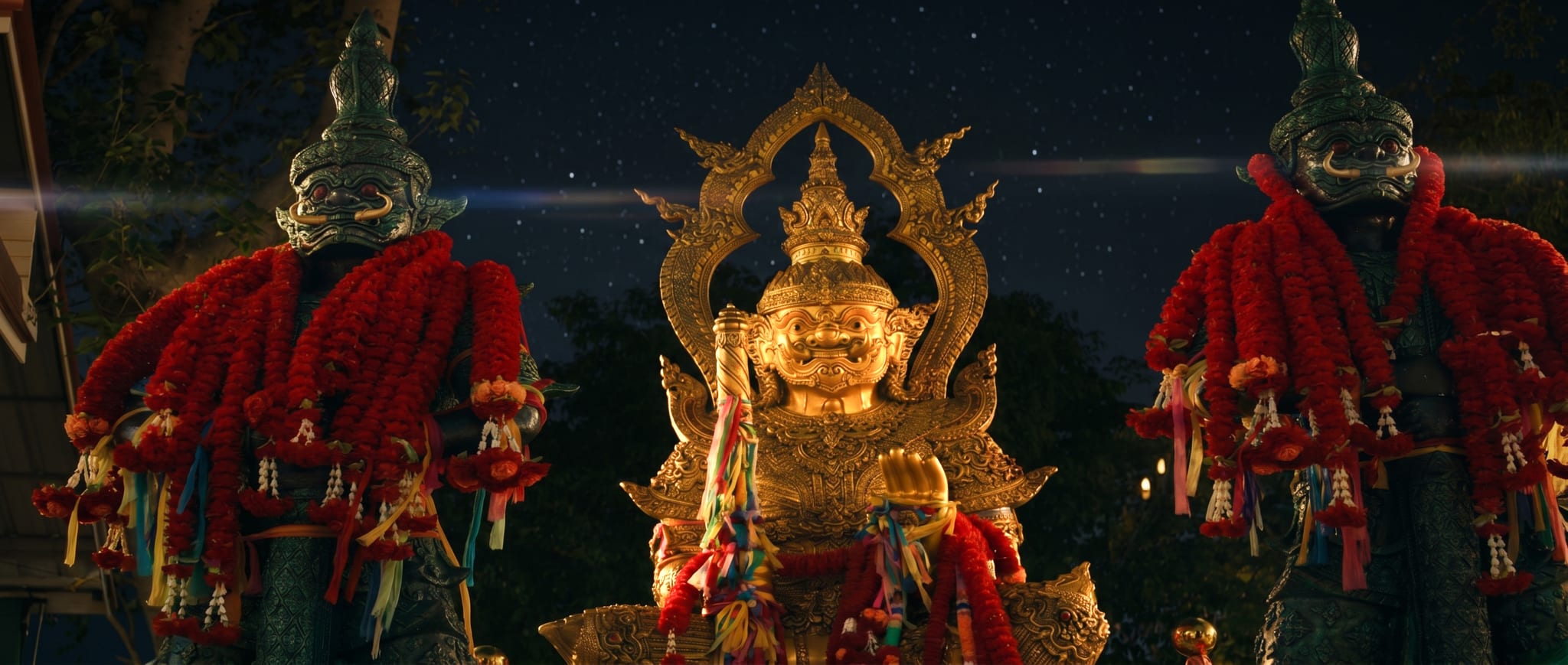
Perched on a forested hill overlooking Pattaya Bay, Wat Khao Phra Bat is one of the oldest continuously active sacred sites in the province. The temple enshrines a footprint of the Buddha — one of the most revered forms of relic in Theravada tradition, representing the physical trace of the Enlightened One's passage through the world.
The ascent to the hilltop shrine is itself an act of merit-making — 350 steps that pilgrims climb barefoot, often carrying offerings of lotus flowers and incense. At the summit, Pattaya spreads below in both directions: the modern city to the south, the fishing coast of Naklua to the north. From here, it becomes clear how thin the line is between the two identities this city carries simultaneously.
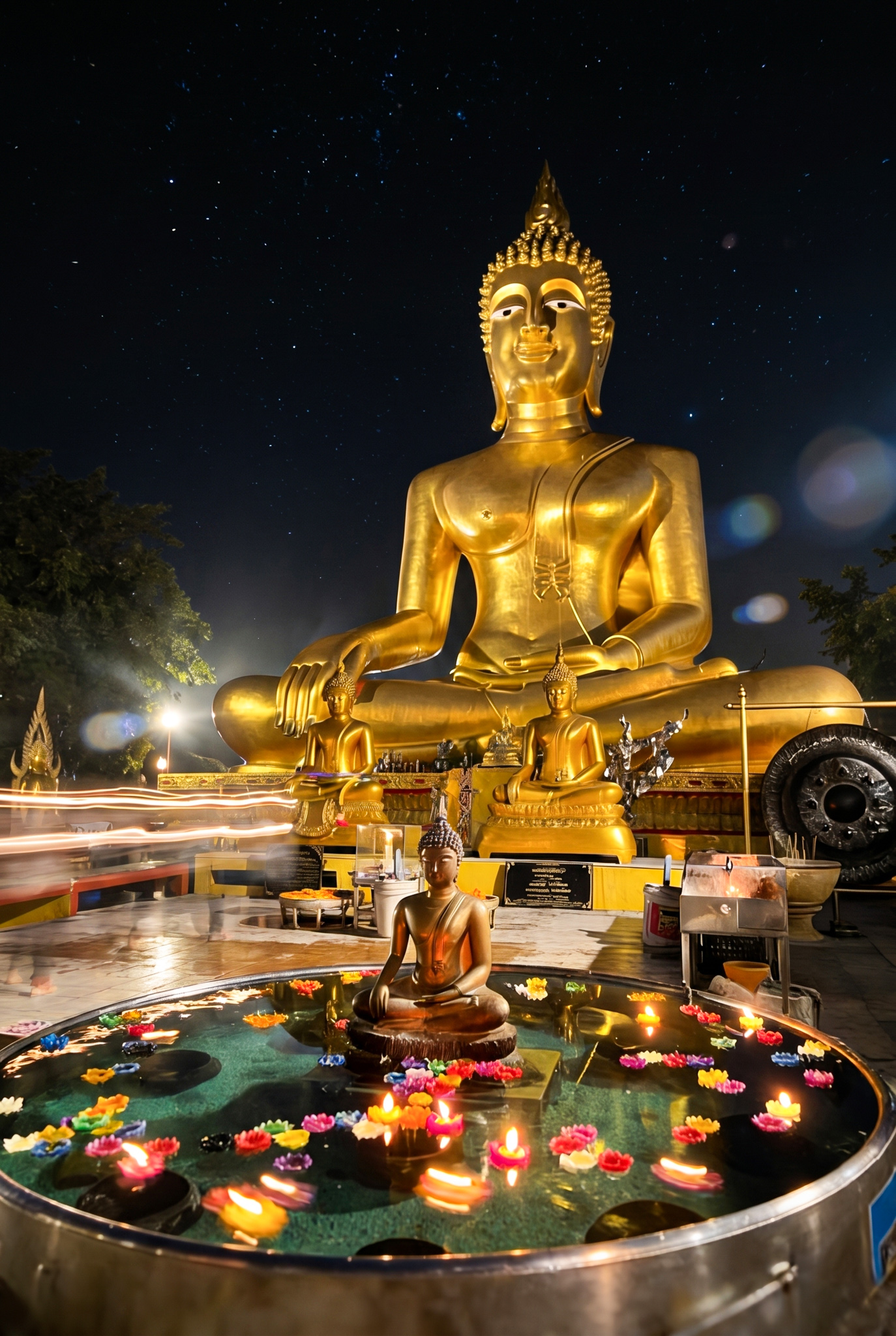
Located in the heart of South Pattaya, Wat Chaimongkol is the urban pulse of the city's Buddhist life — the temple that the city's permanent residents, market vendors, and taxi drivers stop at before beginning their working day. Founded in 1945 by the local fishing community, it remains the most active and most visited temple within the city limits.
Its defining feature is the enormous reclining Buddha — gilded, 20 metres in length — lying in the posture of parinirvana, the moment of the Buddha's final liberation. This image is not contemplative decoration. Thai visitors approach it with specific prayers: for the health of a parent, the success of a business, the safe return of a fisherman. The requests are ancient. The faith behind them is unchanged.
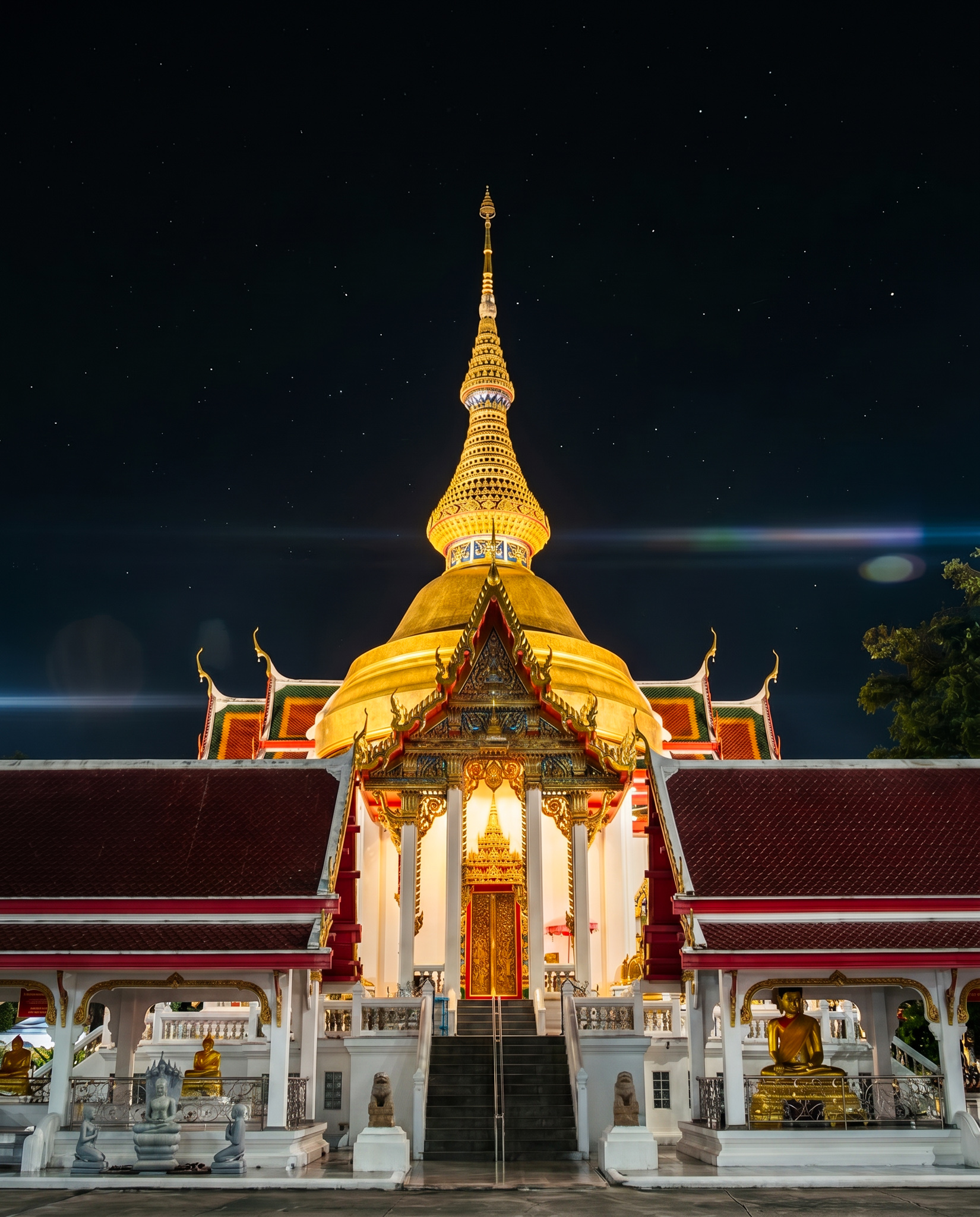
No monument defines Pattaya's visual skyline — and its spiritual identity — more immediately than the Great Buddha of Pattaya atop Khao Phra Tamnak Hill. The 18-metre-tall seated Buddha, robed in brilliant white and gleaming gold, is visible from virtually every point in the city and the southern Gulf waters. Built in 1977 to mark the city's growing status as a regional centre, it has since become both pilgrimage destination and navigational landmark for fishermen returning at dawn.
The hill itself is considered sacred ground — a point at which the earthly and the divine intersect. Smaller shrines line the winding path to the summit, and the views from the peak — south toward Jomtien, north toward the open Gulf — offer a geography lesson in why this bay attracted both settlers and spirits in equal measure.
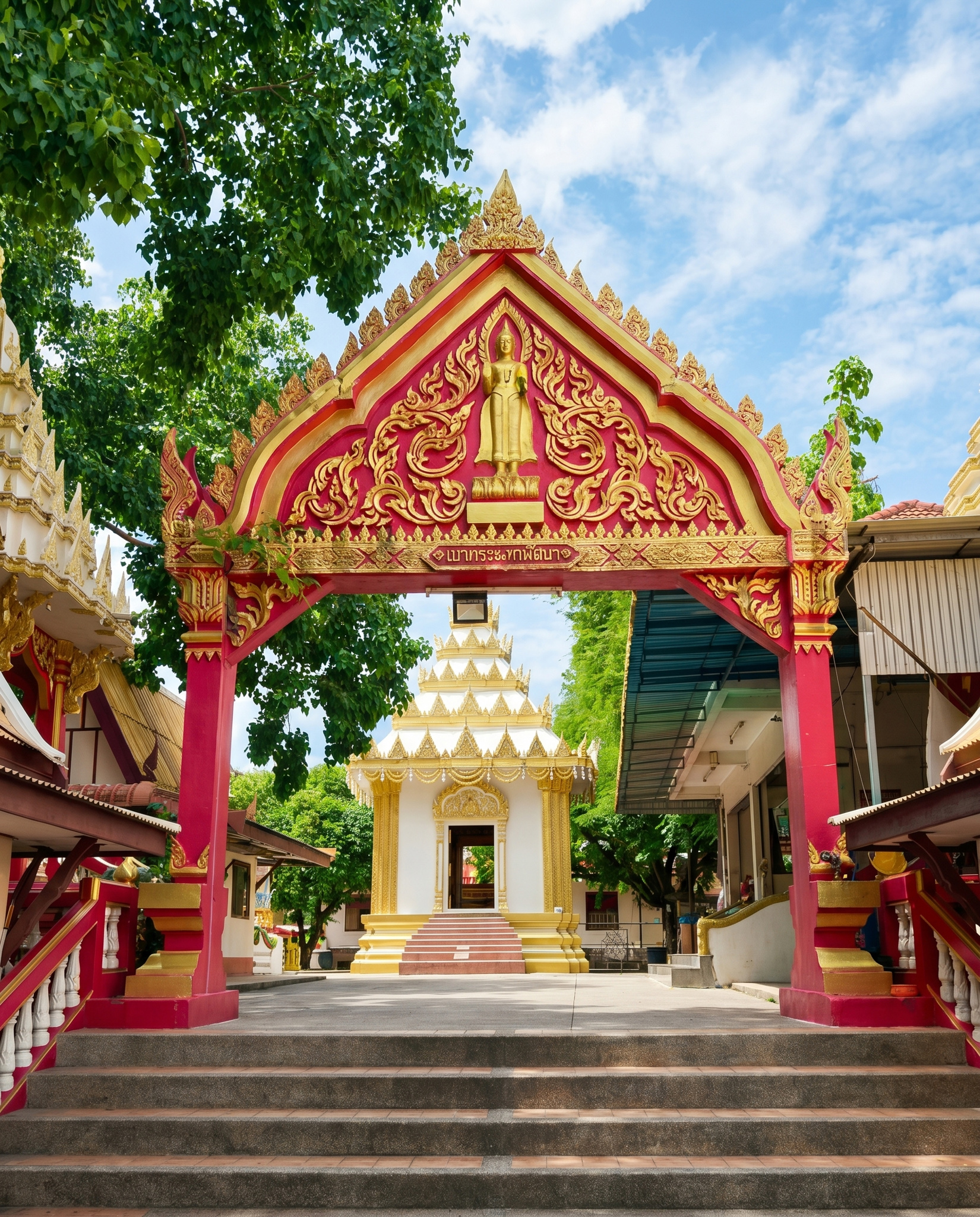
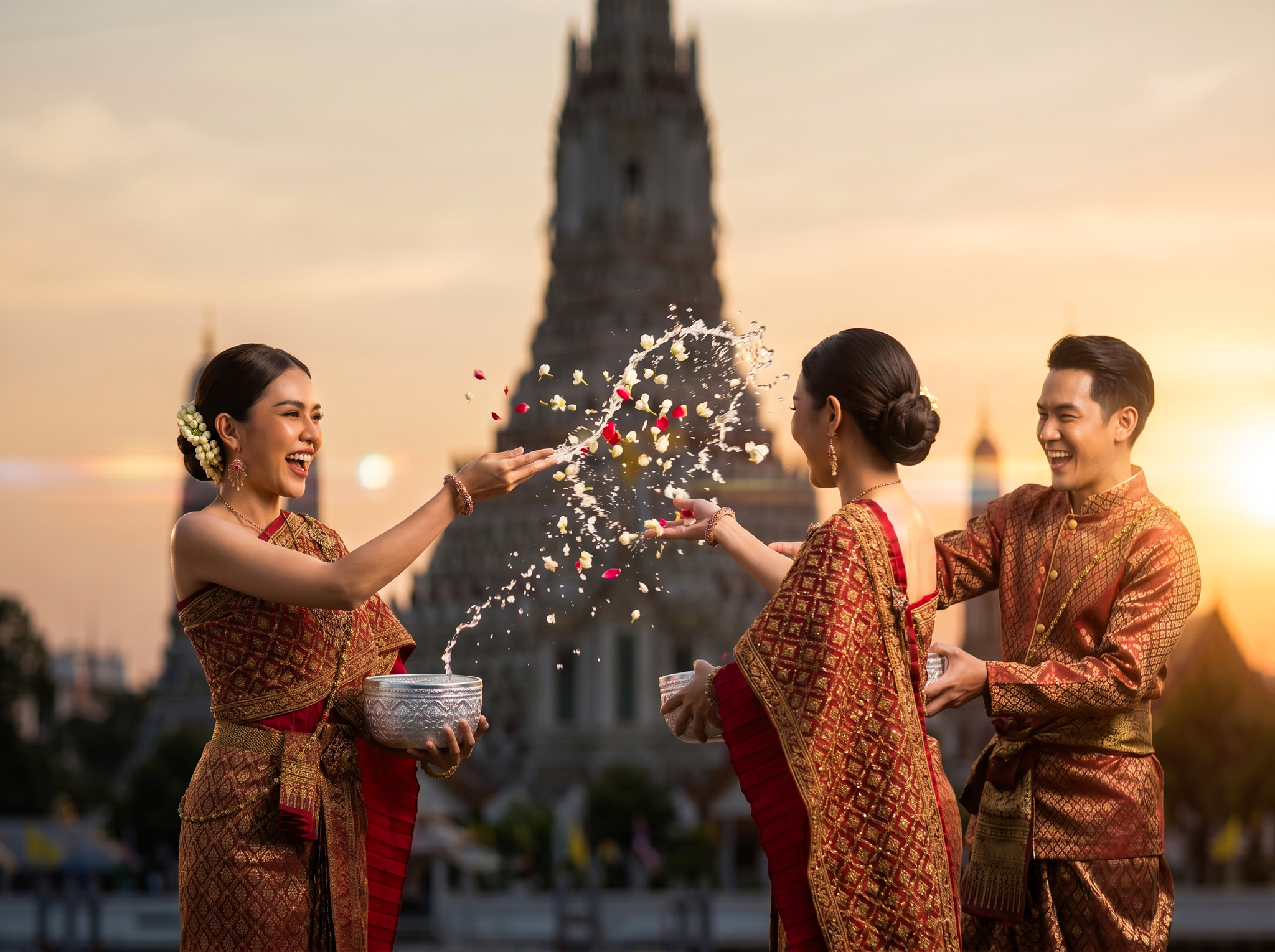
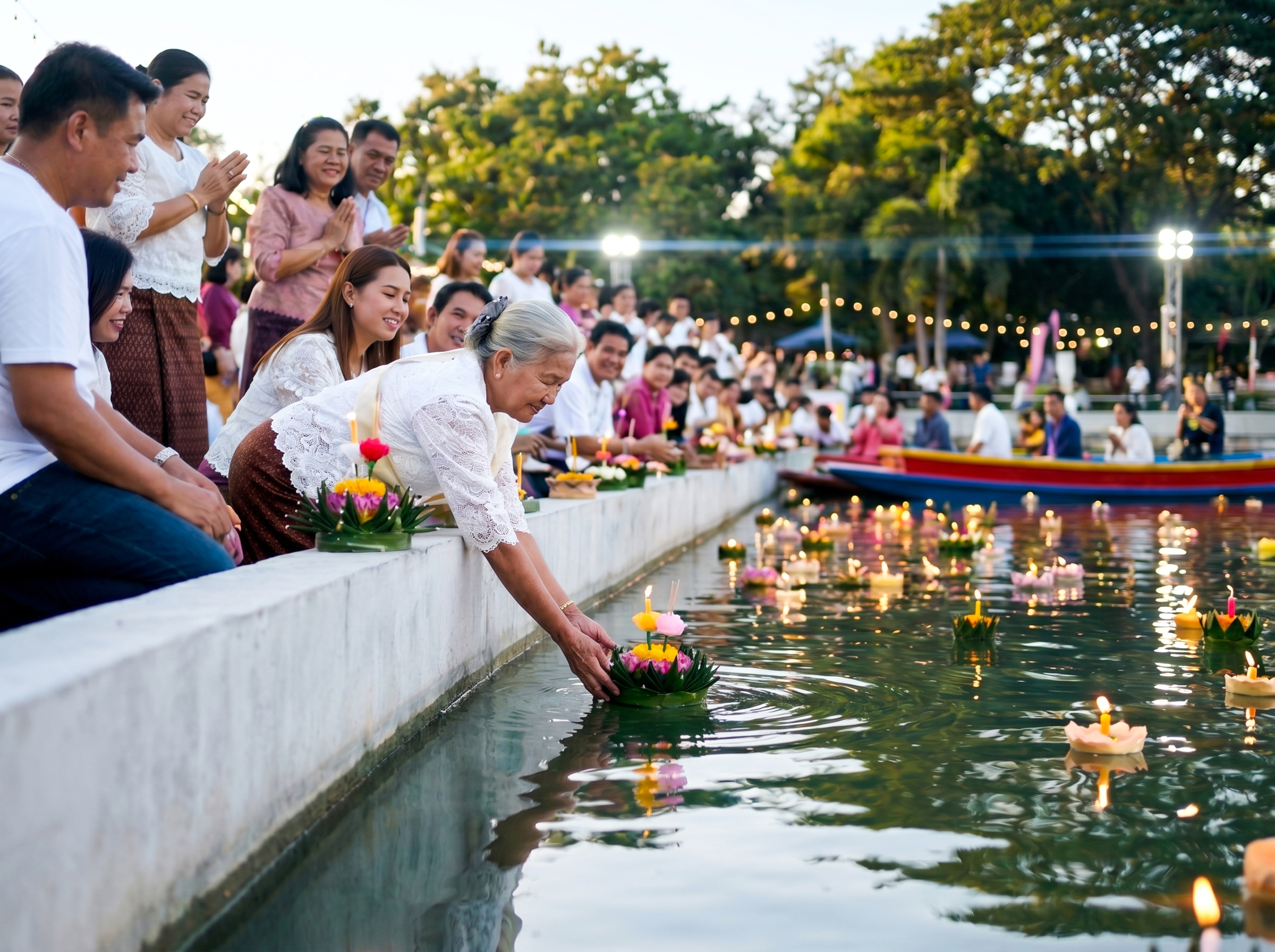
Alongside the Buddhist calendar, Pattaya and Chonburi Province observe a rich cycle of festivals, ceremonies, and living traditions that have no equivalent anywhere else in the world. These are not re-enactments for visitors. They are the city's genuine annual rhythm.
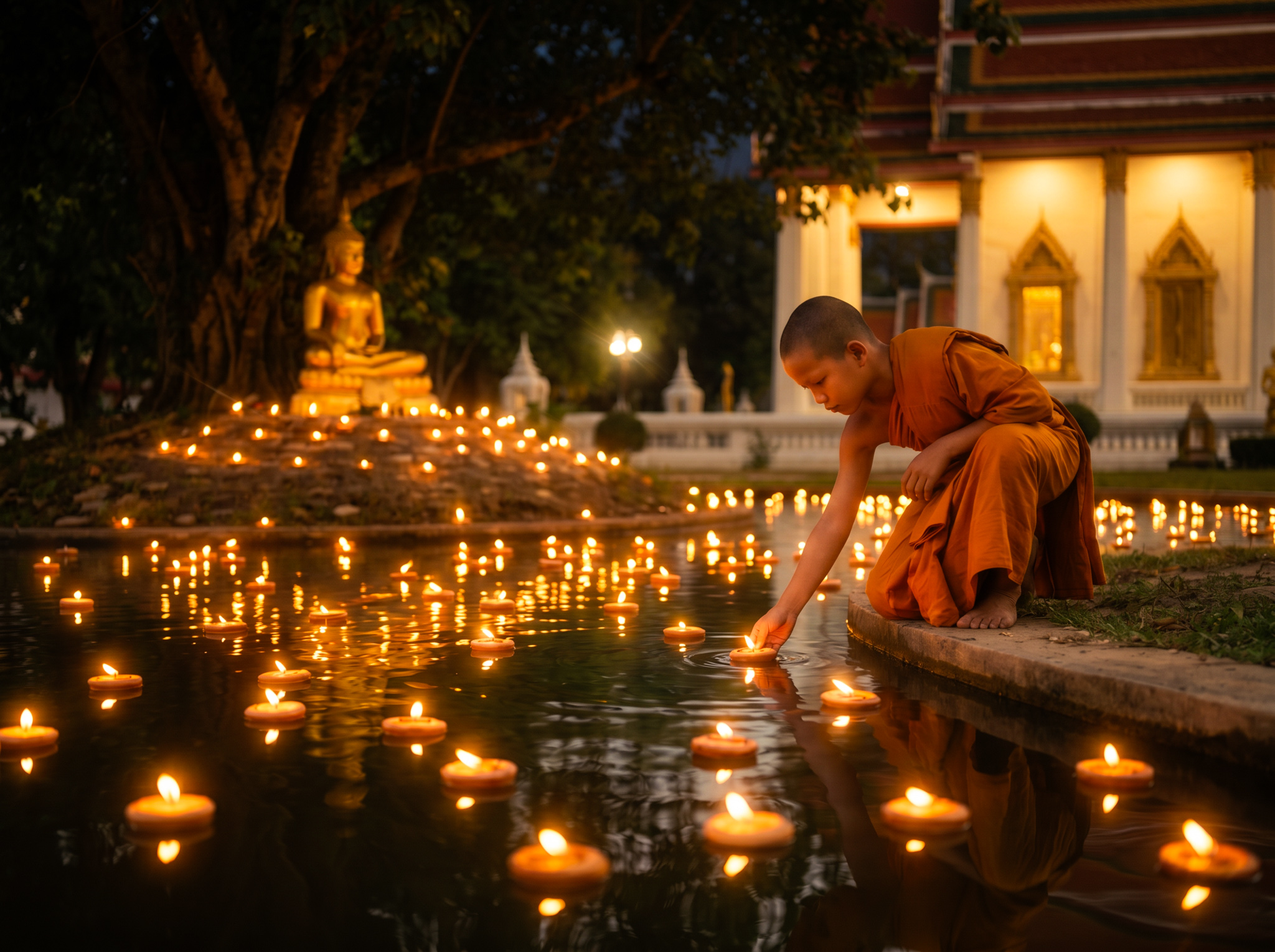
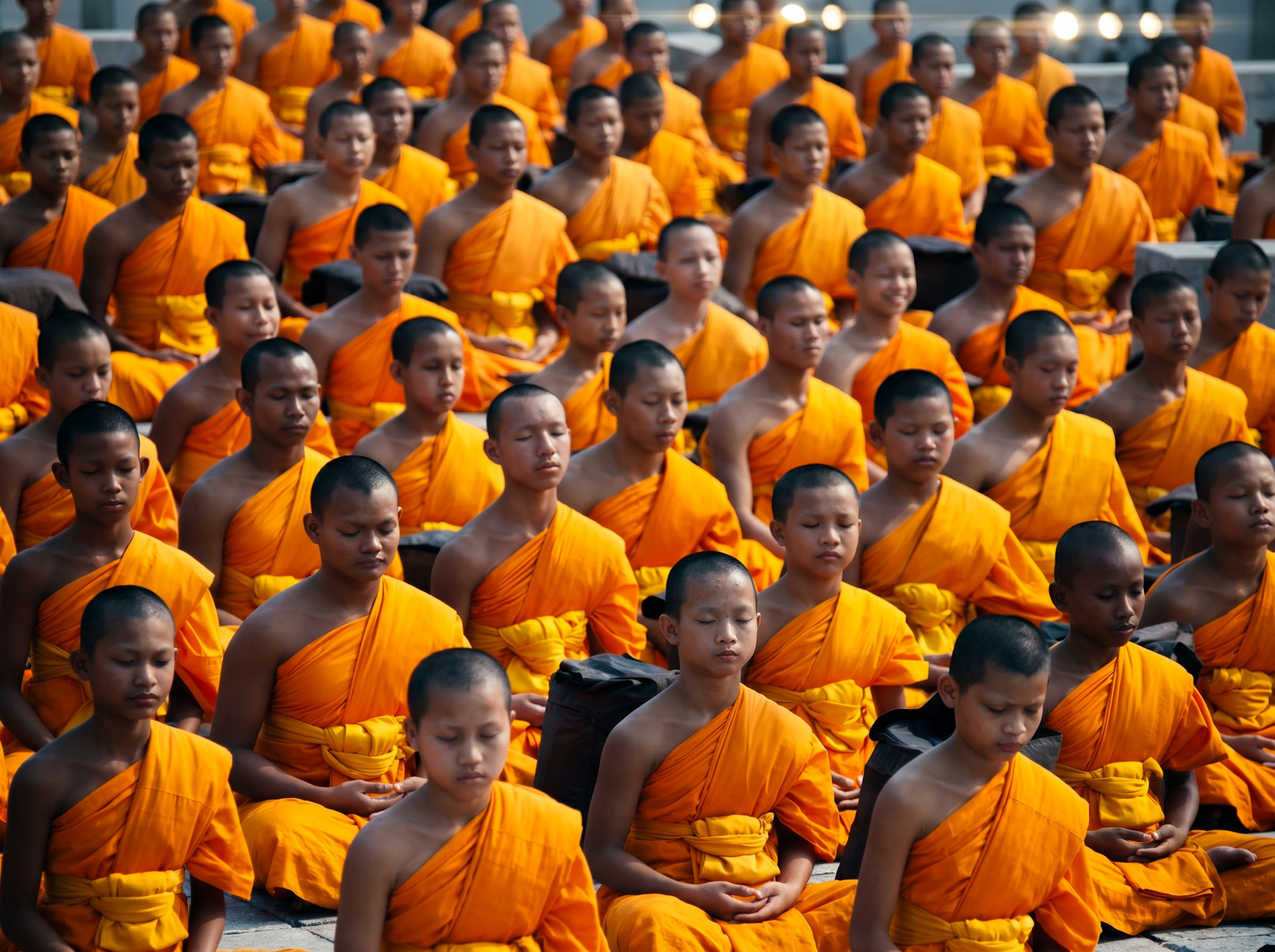
Thai temples are active places of worship, not heritage sites. The monks who live there are not performers. The rituals you observe are real. These guidelines are not restrictions — they are the conditions under which a genuine encounter with Thai spiritual life becomes possible.
Cultural and religious tourism is one of the fastest-growing segments of international travel. For Pattaya, a city often reduced in the global imagination to its beach and entertainment infrastructure, the spiritual landscape represents both a genuine cultural resource and a significant, underleveraged tourism asset.
Thai Buddhist belief is not a uniform, codified system. It is a living, layered tradition that incorporates Brahmanical ritual, animist spirit belief, and Theravada doctrine in a daily synthesis that has evolved across centuries. Understanding it deepens every encounter with the culture.
Every practising Buddhist takes refuge in the Three Jewels: the Buddha (the historical teacher), the Dhamma (his teachings), and the Sangha (the monastic community). This triple refuge is recited daily in Pali — the language of the earliest Buddhist scriptures — unchanged for over two millennia. To encounter a Thai Buddhist at prayer is to witness a moment of deep historical continuity.
The Thai concepts of bun (merit) and karma (the consequences of action) shape behaviour in ways that are invisible to most visitors but pervasive. The generosity of Thai hospitality, the instinct to avoid direct confrontation, the reluctance to cause shame — all of these are downstream consequences of a belief system in which every action has metaphysical weight. Generosity to strangers accumulates merit that shapes future lives.
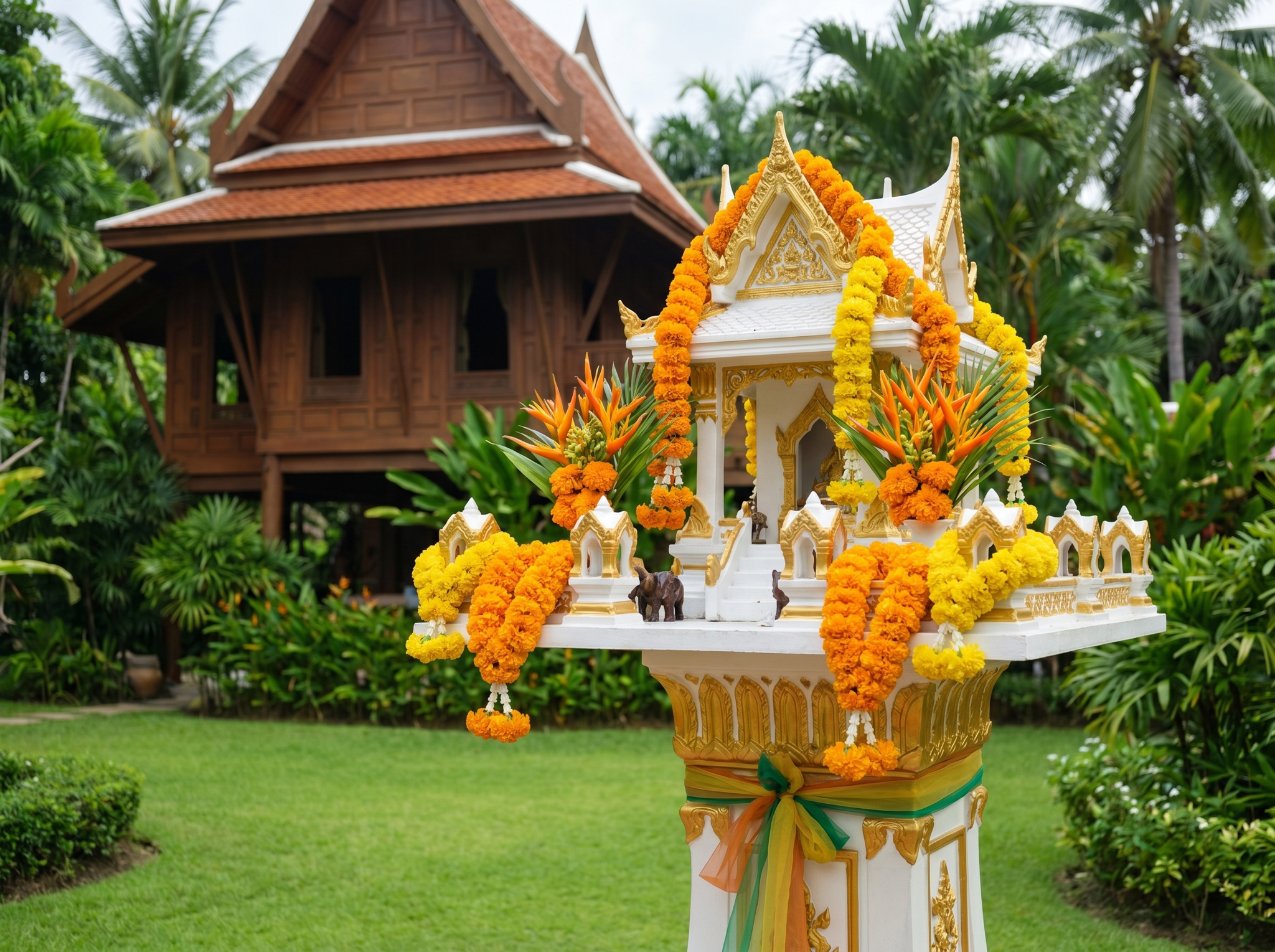
Long before Buddhism arrived in Southeast Asia, the people of the region practised animism — a belief that every natural feature, every building, every place is inhabited by a spirit (phi) that must be acknowledged and appeased. Thai Buddhism absorbed rather than replaced this tradition. The spirit houses at every building entrance, the offerings left at ancient trees, the reverence for sacred mountains — these are animist practices that continue under the Buddhist cultural canopy, uninterrupted.
The Thai monarchy carries a spiritual dimension that is essential to understanding the culture. The King is considered a Bodhisattva — a being of such accumulated merit that they are destined for Buddhahood. The royal temples in Chonburi Province — particularly Wat Yansangwararam — are physical expressions of this relationship between the throne and the Dhamma. Disrespect for the monarchy is experienced by Thai people as a spiritual transgression, not just a political one.
Two concepts shape Thai social interaction in ways that visitors often misread. "Face" (na) — the preservation of dignity and the avoidance of public shame — means that Thai people rarely deliver bad news directly and will often smile when internally uncomfortable. "Sanuk" — the principle that life should contain joy — means that the laughter and lightness of Thai social culture is not superficiality. It is a consciously cultivated spiritual value. Both require visitors to read below the surface.
The wai — pressed palms raised to the face, with a slight bow — is the fundamental gesture of Thai greeting, respect, and gratitude. Its form varies: palms at the chest for an equal, fingertips at the nose for a monk, fingertips above the head for a Buddha image. To receive a wai and not return it is considered deeply rude. To offer one to a service worker is a gesture that communicates unusual cultural literacy and is invariably met with warmth.
"The sea that borders Pattaya has carried fishermen, traders, armies, and tourists. Through every arrival and departure, the monks have been walking before sunrise, the incense has been burning, and the temples have been standing. This is the culture that was here before the city, and will remain after it transforms again."

Effortless travel, exclusive access, and always-on intelligence — AVA knows Pattaya better than anyone.
AVA